Construction contractors often struggle with certified payroll regulations, and non-compliance penalties can reach up to 15% of your total payroll. The complexity increases as more than 5,000 cities in 17 states enforce their own payroll regulations and tax rules. Companies of all sizes struggle to stay compliant with these requirements.
Certified payroll reporting goes beyond simple paperwork. Federal law requires contractors to document their payroll on a weekly basis for all construction projects exceeding $2,000. The Davis-Bacon Act, established in 1931, created these requirements to protect workers’ wages on federal projects. The significance of these regulations becomes clear when you consider that the U.S. Department of Labor recovered over $35 million in back wages for construction workers in 2020 alone. Certified payroll plays a vital role by ensuring construction workers receive fair compensation for their work.
We will break down certified payroll requirements for your construction projects and explain the legal framework you need to know. Our step-by-step process will help you maintain compliance effectively. You’ll learn to handle these requirements confidently and avoid expensive mistakes, whether you’re starting with government contracts or improving your existing payroll processes.
What is Certified Payroll in Construction?
Certified payroll in construction is a special weekly report that contractors must submit for government-funded projects. This system makes sure workers get fair pay based on legal wage standards.
Contractors must complete Form WH-347 or use an equivalent format for federal construction projects worth over $2,000. The documentation needs each worker’s name, job type, work hours, wage rate, gross earnings, deductions, and final pay. A company representative must sign a compliance statement that confirms all information is accurate and complete – this makes it “certified”.
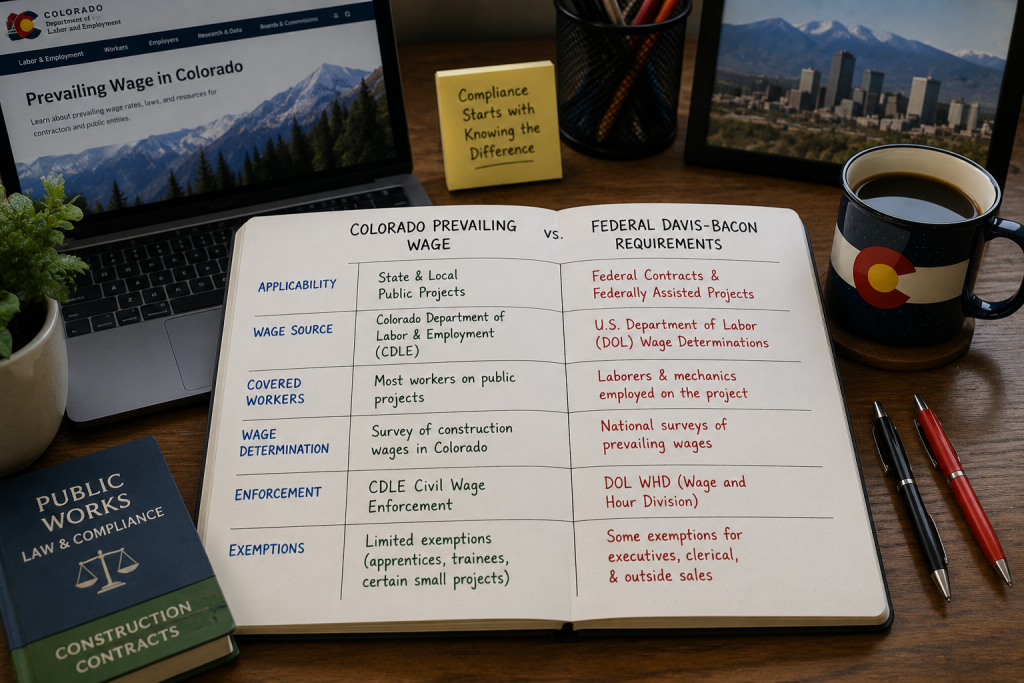
Regular payroll differs from certified payroll, which applies to public works under widespread wage laws that the Davis-Bacon Act created. Teams must submit these reports within a week after each pay period, even during work stoppages.
Non-compliance has serious effects. Government agencies can hold back funds if reports are missing or unsigned, and false information could lead to criminal charges. Missing deadlines might cost thousands in fines or block you from future government work.
Companies can submit reports electronically with digital signatures if they follow the Government Paperwork Elimination Act standards. Prime contractors and their subcontractors share the duty to keep these detailed records.
Understanding the Legal Framework
We based the legal foundation of certified construction payroll on the Davis-Bacon Act. This law requires contractors to pay workers common wages that match local standards for federal projects worth more than $2,000. This regulation marks just the beginning of a complex framework.
The Copeland “Anti-Kickback” Act works among other Davis-Bacon provisions. The act stops contractors from making employees surrender their earned wages. The Contract Work Hours and Safety Standards Act requires overtime pay at 1.5 times the normal rate when work exceeds 40 hours per week on contracts worth more than $100,000.
Contractors need to submit weekly certified payroll records through Form WH-347 or similar formats. Each submission needs a signed Statement of Compliance that certifies the information’s accuracy. Note that contractors must keep these detailed records for three years after completing the project.
State laws add more requirements to the mix. California makes contractors submit their certified payroll records through the Department of Industrial Relations’ online system. The state’s threshold sits at $1,000 – much lower than the federal minimum of $2,000.
Breaking these rules leads to serious penalties. Contractors face withheld payments, back wage charges, and possible bans from future public works projects. Understanding these connected legal frameworks protects your business’s finances and reputation effectively.
How to Do Certified Payroll Step-by-Step
Understanding your documentation requirements is the first step to creating proper certified construction payroll. You’ll need specific information about each worker. This includes their name, address, social security number, labor classification, hourly rates, daily hours worked, and deductions made.
Form WH-347 is the standard reporting template. Contractors can use other formats that contain similar information and compliance statements. This form meets all requirements under the Davis-Bacon Act regulations when filled out correctly.
The wage determination needs review before processing payroll runs to verify classification rates. Timecards must match the actual job duties performed. Workers need classification based on their specific roles. Misclassification is one of the most common compliance errors.
Submit your reports weekly within seven days after each pay period. Someone responsible for wage payments must sign the Statement of Compliance. This signature certifies that all provided information is accurate.
Keep detailed records for at least three years. Your business must keep payroll documents, collective bargaining agreements, and sales records ready for inspection.
Book a Certified Payroll Strategy Session and get expert guidance to simplify prevailing wage compliance, avoid costly mistakes, and keep your construction projects moving forward with confidence.
Conclusion
Construction contractors face substantial challenges when dealing with certified payroll requirements. These requirements are vital to business success. This piece shows how the Davis-Bacon Act creates the foundations for fair wage practices on government projects and outlines what it all means when rules aren’t followed.
Certified payroll needs precise attention to detail. This includes proper worker classification and accurate documentation of hours and wages. A small mistake could stop your payments or block you from future government contracts.
Documentation is the lifeblood of compliance. Keeping detailed records for three years protects your business from audits and shows your steadfast dedication to worker protection laws. Many contractors have found that using specialized software cuts down errors and makes weekly reporting easier.
Don’t see certified payroll as just another set of rules. Call it a chance to show your company’s integrity and commitment to fair labor practices. We know these complex requirements can strain your business.
Book a Certified Payroll Strategy Session and let our prevailing wage specialists help you build the right systems, protect project profitability, reduce compliance risk, and keep your construction projects labor-compliant from day one.
Smart contractors know that certified payroll compliance does more than prevent penalties. It builds reputation, creates trust with government agencies, and sets the stage for growth in public works contracting. Your commitment to accurate payroll will, without doubt, bring rewards throughout your construction business trip.