
Government-funded construction projects can drive significant revenue for your company, but they carry strict wage requirements that expose you to costly penalties, fines, and contract termination if misunderstood. You need to understand prevailing wage requirements before bidding on any public works project.
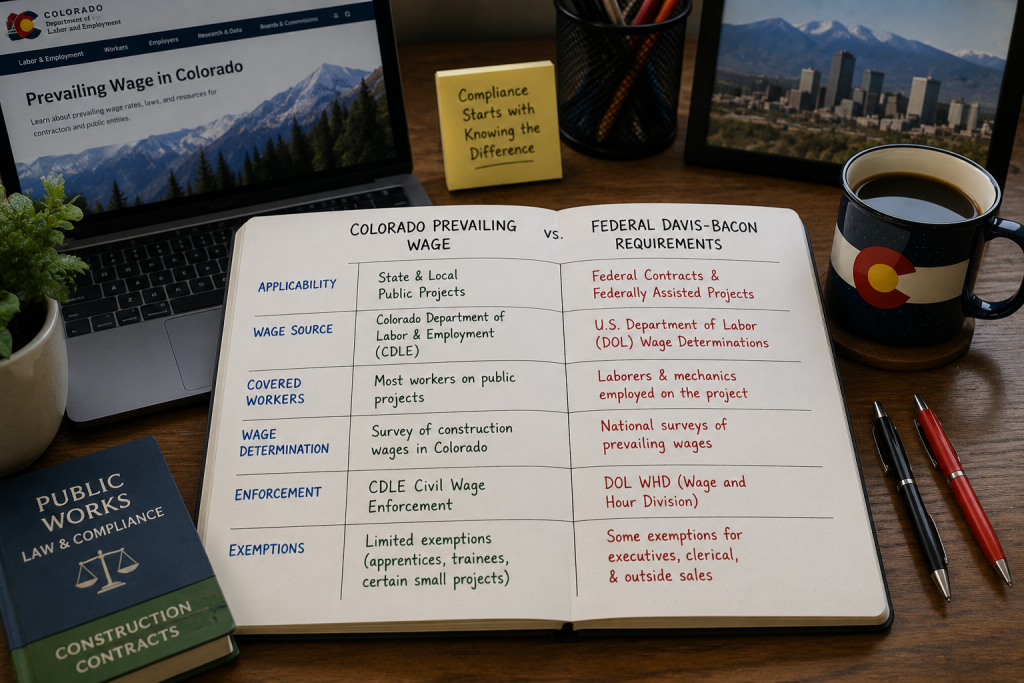
The Davis-Bacon Act requires you to pay workers according to locally determined wage standards on federally funded projects exceeding $2,000. Right now, 32 states have enacted prevailing wage laws, and civil money penalties have reached up to $13,508 per violation. Non-compliance can result in withheld payments, fines, contract termination, and reputation damage that follows your company for years.
We created this guide to help you understand these requirements and protect your profitability on government contracts.
What Is Prevailing Wage in Construction
Prevailing wage represents the minimum hourly compensation you must pay workers on public works projects. This includes both the basic hourly rate and fringe benefits for each worker classification. The prevailing wage combines the basic hourly rate with any fringe benefits listed in the applicable wage determination.
The U.S. Department of Labor establishes these rates using periodic survey data from construction projects in each county. Both union and non-union contractors participate in these surveys, so the rates reflect actual market conditions rather than only union wages. The prevailing wage equals the wage paid to the majority (more than 50 percent) of workers in that classification on similar projects in the area. When no majority wage exists, the rate becomes the average of wages paid, weighted by total employment in that classification.
State agencies set prevailing wage rates comparable to wages paid for similar work in your project’s county. These rates vary by county and labor type, determined through collective bargaining agreements or wage surveys when collective agreements aren’t available.
Fringe benefits include life insurance, health insurance, pension, vacation, holidays, and sick leave. These benefits count toward meeting your prevailing wage obligations and can help you manage project costs effectively when structured properly.
Why Prevailing Wage Compliance Matters for Your Construction Projects
Compliance protects your business from substantial financial and legal risks. Non-compliance leads to withheld payments, fines, and losing opportunities for future government contracts. If employees feel underpaid, they can sue not only your company but everyone involved in the project, including the client. This creates costly legal fees and damaging publicity that can follow your company for years.
Compliance delivers measurable business advantages:
Reduced Turnover Costs. Workers who receive fair wages stay with projects longer, reducing costs tied to recruitment, training, and lost productivity.
Enhanced Reputation. You build positive recognition for fair labor practices, making your company more attractive to clients and partners.
Quality Work. Payment of prevailing wages ensures you hire qualified workers, resulting in better project outcomes.
Financial Incentives. Under the Inflation Reduction Act, meeting prevailing wage and apprenticeship requirements can increase clean energy tax benefits by five times.
We help contractors structure compliant payroll systems and maximize available tax credits while protecting profitability. Learn what we can do for you.
Essential Compliance Requirements Every Contractor Must Know
Your responsibility extends beyond your direct payroll. As a prime contractor or taxpayer claiming tax credits under the Inflation Reduction Act, you must ensure all contractors and subcontractors working on your project pay laborers and mechanics the required rates. This applies to work performed at the facility location and any secondary work sites established specifically for the project.
Who gets paid prevailing wages? All individuals whose duties are manual or physical in nature, including those using tools or performing trade work. This includes apprentices and helpers. Workers whose duties are primarily administrative, executive, or clerical fall outside this requirement.
When payment matters. You must pay workers according to regular payroll practices and in compliance with all applicable local, state, and federal laws. Wages consist of the full amount due, including bona fide fringe benefits, computed at rates not less than those in the applicable wage determination. Deductions cannot be taken except those required by law or permitted by Department of Labor regulations.
Beyond federal prevailing wage provisions, you must ensure compliance with the Fair Labor Standards Act and applicable state or local laws. Contractors found violating state prevailing wage laws on two occasions within five years may be disbarred from public works projects for four years.
Conclusion
Prevailing wage compliance protects your business from substantial financial and legal risks while unlocking competitive advantages that drive long-term success. Contractors who understand these requirements gain access to profitable government contracts, reduce worker turnover costs, and build reputations that attract future opportunities.
Treat compliance as an investment in your company’s future rather than a regulatory burden. We can help you, your company, and your subcontractors structure compliant systems and pursue profitable government contracts confidently:
Learn what we can do for you through our free consultation sessions.