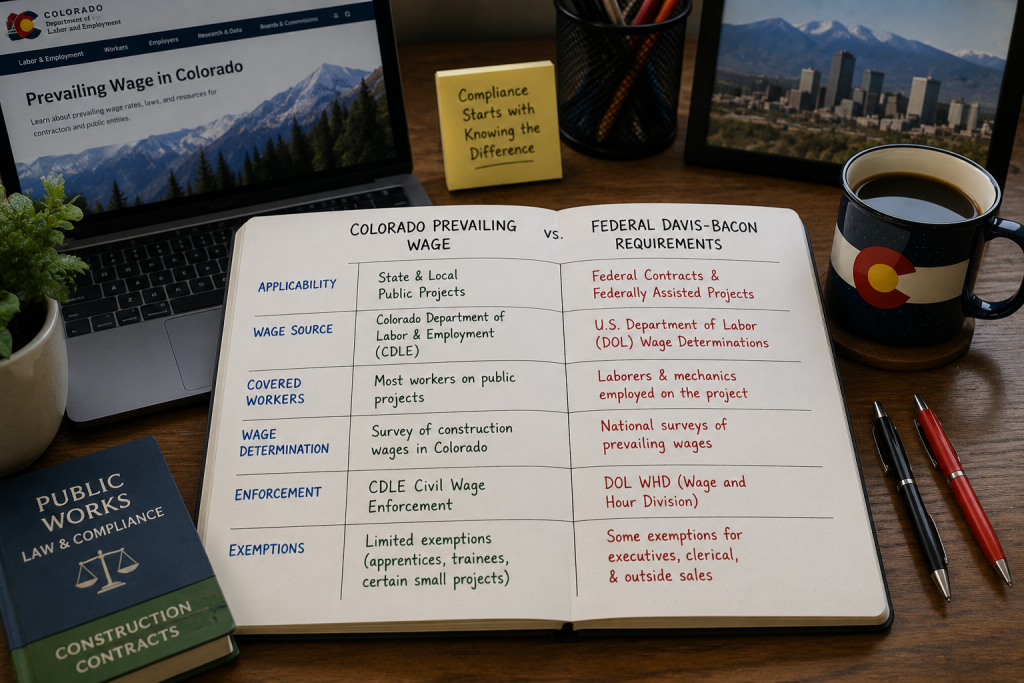

Certified payroll and prevailing wage aren’t separate compliance requirements – they work as an interconnected system that protects your business from costly consequences. Contractors working on federally-funded construction projects exceeding $2,000 must submit certified payroll reporting to verify that workers receive prevailing wage rates. Failure to submit these weekly reports on schedule can result in contract funds being withheld and ineligibility for future federal projects. The stakes don’t stop there. Non-compliance leads to severe penalties and suspension from future bids. In this piece, we’ll walk you through what certified payroll is, why certified payroll reporting is required for prevailing wage compliance, and how to do certified payroll the right way to protect your profitability and reputation.
What is certified payroll and prevailing wage?
Certified payroll is a specific type of payroll record contractors submit to prove they’re paying workers the required wages and benefits by law on government-funded construction projects. These reports verify compliance with prevailing wage laws and labor standards for publicly funded work.
Prevailing wage represents the hourly wage, usual benefits, and overtime paid to the majority of workers within an area. Federal rates follow regulations from the U.S. Department of Labor, which define prevailing wage as “the wage paid to the majority (more than 50 percent) of the laborers or mechanics in the classification on similar projects in the area during the period in question”. If no single wage reaches that majority threshold, prevailing wage becomes the average of wages paid and weighted by total employment in the classification.
The Davis-Bacon Act of 1931 formed the foundation for federal prevailing wage requirements on construction contracts exceeding $2,000. Certified payroll reporting serves as the enforcement mechanism for these requirements. Contractors submit Form WH-347 each week that documents worker classifications, hours worked, wage rates paid, and fringe benefits provided. Every submission has a Statement of Compliance that certifies the information is accurate and workers received no less than the required Davis-Bacon prevailing wage rates.
Why is certified payroll reporting required for prevailing wage compliance?
The legal foundation for certified payroll reporting stems from federal statutes designed to protect workers and ensure fair wage practices. The Copeland Act requires contractors and subcontractors on federal or federally-financed construction contracts to furnish a statement on wages paid to each employee during the prior week. DOL Regulations mandate contractors submit weekly certified payrolls to the appropriate federal agency.
Each certified payroll submission must include a signed Statement of Compliance showing the payrolls are accurate and complete, and that each laborer or mechanic received no less than the required Davis-Bacon prevailing wage rates, including fringe benefits. This statement certifies that the payroll information is correct, wage and fringe benefit rates meet applicable requirements, all records are complete and accurate, worker classifications reflect actual work performed, and apprentices are registered in bona fide programs.
DOL and contracting agencies receiving this information review it to determine whether workers received legally required wages and fringe benefits. Contractors must pay covered workers weekly and submit weekly certified payroll records to the contracting agency. Contract payments may be withheld in sufficient amounts to satisfy liabilities for unpaid wages. Violations may be grounds for contract termination, contractor liability for resulting government costs, and debarment from future contracts for three years. Willful falsification of statements may subject contractors to civil or criminal prosecution.
How to do certified payroll for prevailing wage projects
Certified payroll for widespread wage projects requires collecting detailed worker information on a weekly basis. Gather payroll data for all covered employees first. This includes full names, identification numbers, job classifications that match the wage determination, daily hours worked, and wage rates paid. Track fringe benefits provided through approved plans or paid as cash as well.
Form WH-347 serves as the standard template. Contractors may use their own payroll format if it contains all the information needed. Reports must be numbered in sequence, with the word “Final” typed on the last submission. Business owners need only include their name, work classification, including “owner,” and daily total hours worked.
Workers who perform multiple classifications under the contract require separate lines. These lines distinguish different job classifications, hours worked, and hourly wages earned for each. Combine the classifications when you record gross earnings, deductions, and net wages. Registered apprentices who perform work must be reported with the current pay scale and a copy of the apprenticeship agreement.
Submit completed reports within seven days after the regular payment date. Send them to the agency representative at the project site or by mail. You must preserve certified payroll records for three years after project completion. State requirements may mandate specific submission portals or documentation beyond federal WH-347 standards.
Conclusion
Certified payroll reporting isn’t optional for prevailing wage projects. Accurate weekly submissions protect your business from withheld payments, debarment, and penalties that get pricey. The documentation process requires attention to detail, from worker classifications to fringe benefit tracking. Mistakes can jeopardize your contract and future bidding opportunities. Proper procedures keep you compliant and safeguard your reputation.